In busy workplaces, efficiency depends on more than people and processes alone. The physical environment also plays a major role in how smoothly a site operates.

When equipment is hard to find, work areas are unclear, instructions are inconsistent, or visitors interrupt staff for directions, time is lost and mistakes become more likely. Over time, these small friction points can affect productivity, safety, and the overall experience of the workplace.

That is why workplace signage for efficiency is so important.

Well-planned signs and graphics help people move through a space more easily, understand where things belong, and access key information quickly. In warehouses, manufacturing facilities, offices, and operational sites, signage can support a more organised, consistent, and efficient workflow.

At Hardy Signs, we help businesses create signage and graphics that do more than identify spaces. We design solutions that help workplaces function better.

Why Workplace Signage Matters for Efficiency

When a site is clearly organised, people make faster decisions and spend less time searching, asking, or second-guessing.

Signage can help reduce unnecessary movement, improve communication, reinforce procedures, and make work areas easier to understand at a glance. This is especially important in larger workplaces where several teams, processes, and visitors may all be using the same environment.

For operations teams, facilities managers, and decision-makers, effective signage can support:

  • clearer workflow across departments
  • better use of space
  • faster movement around the site
  • fewer avoidable mistakes
  • improved safety awareness
  • more consistent site standards
  • a better experience for staff, visitors, and contractors

In other words, signage helps make the environment work harder.

1. Clearly Label Equipment and Resource Areas

One of the simplest ways to improve workflow is to make equipment, tools, and key resources easier to locate.

Whether the site includes printers, scanners, stock areas, production machinery, first aid points, collection zones, or shared equipment stations, staff need to know where to find what they need without delay.

Clear signage helps remove uncertainty and reduces wasted time, particularly in busy or fast-moving environments. It can also help new starters, temporary staff, and contractors settle into the site more quickly.

In larger spaces, overhead signs, wall-mounted signs, and area markers can all help make equipment locations more visible and easier to identify from a distance.

2. Define Work Areas More Clearly

Many workplaces depend on clearly separated zones to keep operations running smoothly.

In a warehouse or manufacturing environment, this may include goods-in, dispatch, picking, assembly, quality control, storage, packing, and management. In offices or mixed-use environments, it could include departments, meeting spaces, reception, staff-only areas, and shared service points.

When these areas are not clearly labelled, people lose time, make mistakes, or interrupt others to ask where they need to go.

Good signage helps define each area clearly and consistently. This supports a more organised environment and makes it easier for staff to navigate the site as part of their day-to-day role.

For operational sites, this can have a direct impact on speed, clarity, and overall efficiency.

3. Keep Messaging Simple and Easy to Read

One of the biggest mistakes in workplace signage is trying to say too much.

The most effective signage is clear, direct, and easy to understand quickly. In a busy working environment, people do not have time to stop and read long explanations. Signs should communicate the message immediately.

This means using:

  • short wording
  • clear headings
  • strong contrast
  • readable typography
  • simple visual hierarchy

Where possible, signs should identify a place, action, or instruction without unnecessary wording. The clearer the message, the easier it is for people to act on it correctly.

For businesses looking to improve workflow, clarity is often more valuable than complexity.

4. Use Graphics and Visual Aids to Support Instructions

Not every important message should rely on text alone.

Graphics, symbols, and visual aids can help employees absorb information more quickly, especially when reinforcing procedures, safety expectations, or workflow steps. This is particularly useful in environments where staff need to make fast decisions or where information needs to be understood at a glance.

Visual communication can be used for:

  • process reminders
  • safety instructions
  • equipment guidance
  • workflow steps
  • operational notices
  • zone identification

Used properly, graphics can improve consistency and reduce the risk of messages being overlooked or misunderstood.

For facilities and operations teams, this can help create a site that is easier to manage and easier for people to work within.

5. Improve Movement With Better Wayfinding

An efficient workflow is not only about staff. It also includes how visitors, contractors, and delivery drivers move around the site.

If people cannot easily find reception, meeting rooms, collection points, welfare areas, or key departments, staff often end up stepping in to help. In larger facilities, this can create repeated interruptions and unnecessary friction throughout the day.

Wayfinding signage reduces that problem by helping people navigate independently and more confidently.

Good wayfinding can support:

  • visitor journeys
  • contractor access
  • departmental navigation
  • reception and check-in flow
  • movement through larger or more complex buildings

For workplaces that regularly receive external visitors or operate across larger footprints, better wayfinding can improve both efficiency and overall site experience.

6. Support Safety and Workflow at the Same Time

In many operational environments, safety and efficiency go hand in hand.

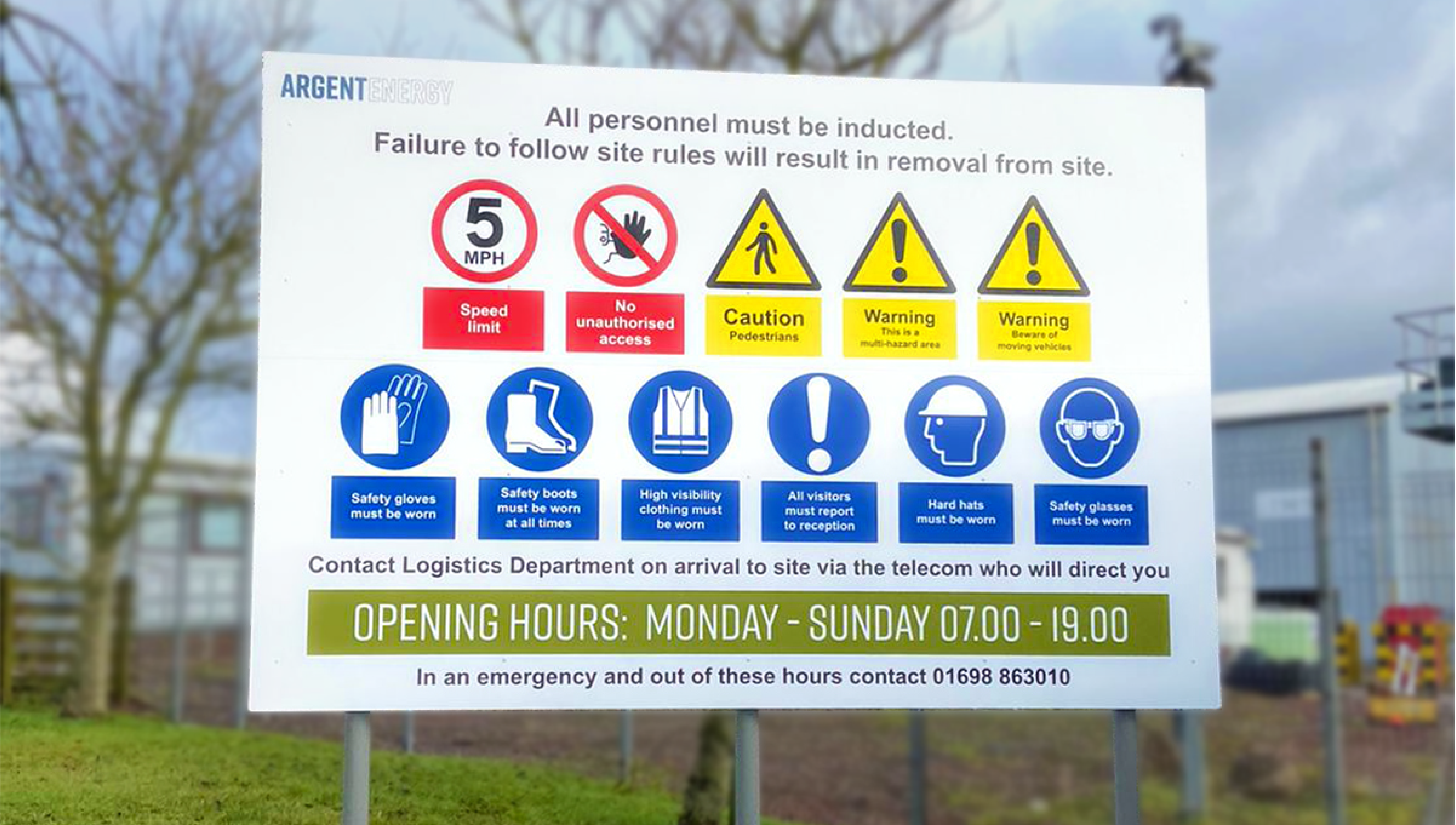
Clear signage reinforces safe movement, identifies hazards, separates pedestrian and vehicle routes, and highlights critical instructions without disrupting the pace of work. When done well, this helps create a site that is both more productive and easier to manage responsibly.

In manufacturing sites, warehouses, and industrial workplaces, signage often needs to serve multiple roles: supporting compliance, reducing confusion, and helping operations run smoothly.

That is why signage should be treated as part of the wider workflow system, not just as an afterthought.

7. Create Consistency Across the Entire Site

One-off signs added over time can lead to clutter, inconsistency, and confusion.

A more strategic signage approach helps businesses create consistent standards across departments, processes, and locations. This makes the environment easier to understand and gives the workplace a more organised, professional feel.

For decision-makers, consistent signage also makes it easier to scale site standards across multiple areas or multiple locations. That can be particularly valuable for businesses looking to improve operational control and maintain higher standards across their estate.

Better Signage Helps Workplaces Function Better

Workplace signage is often seen as purely practical, but its impact can be much broader.

Done properly, signage helps people work more efficiently, navigate more confidently, and interact with the environment more effectively. It supports workflow, reduces avoidable delays, and helps create a site that feels better organised from the ground up.

At Hardy Signs, we work with businesses across the UK to design, manufacture, and install signage solutions that improve clarity, efficiency, and consistency in real working environments.

Talk to Hardy Signs

If you are looking to improve workflow across your workplace, warehouse, office, or manufacturing site, Hardy Signs can help.

We create bespoke signage and graphics that support safer, more organised, and more efficient environments for staff, visitors, and operational teams.
West Midlands Bus on Demand is a new type of bus service in Coventry which does not follow a specific route. Differently from traditional bus routes, you book a journey and a bus will pick you up at a time you choose. 

Hardy Signs vinyl installers team spent 10 days at the customer’s site in Coventry whilst buses were still in operation. 13 Mercedes Sprinter Minibuses were stripped of existing graphics and applied fresh red vinyl. We would like to thank our main contractor Coachscanner for trusting us with their fleet once again.https://youtu.be/2drNgMmDHZYThe UK’s largest demand-responsive transport came together as a merger of West Midlands Bus On Demand and Ring & Ride. It will run throughout 2023 and will provide customers of both services with access to more vehicles, longer hours of operation, more extensive coverage and lower fares.

Over 100 metres of vinyl have been designed, printed and applied. Our team of 4 fleet-wrapping specialists stripped all minibuses of their existing vinyl, turning them back to the initial plane white surface. The minibuses were kept in cool conditions overnight and then applied the fresh branded vinyl the following day. 

West Midlands Bus On Demand logo and branding were applied alongside a total cover in red to the cab and various print and cut graphics to the sides and rear.

Tom Hardy, Operations Director at Hardy Signs, said: ”We are pleased to have helped bring to life the vision of West Midlands Bus On Demand and Ring & Ride. Our team did a great job on-site whilst ensuring minimum disruption to the service.”

“Our commitment to innovation and sustainability in the West Midlands has led us to harness the latest app technology to revolutionize the way we use public transportation. By freeing buses from fixed routes and stops, we are able to offer convenient and affordable alternatives to the car while simultaneously reducing congestion and addressing the climate change emergency,” remarked Andy Street, Mayor of the West Midlands. He further added that the WM On Demand service has been particularly popular among commuters whose travel routes don’t follow the usual paths. This overwhelming response has inspired us to expand the coverage zone to include the hospital and city centre and increase the number of buses available for WM On Demand passengers.”


More information: 

This new and improved West Midlands Bus On Demand service will offer greater benefits due to its larger fleet of fully accessible vehicles and extended operating hours from 06:00 to 23:00 on weekdays, 08:00 to 23:00 on Saturdays, and 08:00 to 15:30 on Sundays. As a result of this expansion, Ring & Ride customers will be able to access more areas around Coventry and will have more flexibility with their booking options.

Currently, Ring & Ride bookings are only taken one day before the journey, but under the new service, customers can book up to six days in advance. Additionally, there will be a new charging structure based on distance travelled, with half-price concession fares available for children under 18, elderly users, and customers with disabilities. The fare structure proposed will have existing Ring & Ride passengers pay just £1 for journeys under three miles and concession fares capped at £2 for longer journeys of up to 10 miles. This trial merger will be operational in 2023.Get a quote now

Gallery:

About the company: Hardy Signs is a professional and digital signage company that designs, manufactures and installs bespoke signage products to a wide range of business sectors in the United Kingdom. The company has been awarded the manufacturer of the year in 2019 and 2020.

Are you a small business owner interested in wrapping your vehicle with an attractive vinyl wrap design? If so, you’re making a wise choice because vehicle wrapping is an effective and affordable advertising method for entrepreneurs and new business owners.

Here are the top four benefits of vehicle wrapping for small business owners.


1) One-Time Investment

Vehicle wrapping requires a one-time investment for the vehicle wrap design and installation costs. After that, you won’t have any further financial obligations or recurring fees.

The cost savings are far superior to traditional advertising methods like newspaper classified ads and TV commercials.


2) Attract Local Attention Everyday

Vehicle wraps can be customized and made colorful, vibrant, and effective at promoting your company’s message and imagery.

Because of this, your vehicles will attract the attention of your local target audience wherever they are driven. Then your small business can stand out from the competition in the area.


3) Protect Your Vehicle’s Paint

Vehicle wraps are made of 3M vinyl film material, which is resistant to rain, sunlight, dirt, debris, and other common outdoor hazards.

Therefore, you don’t have to worry about your vehicle paint deteriorating because the vinyl film wrap will protect it for as long as it covers it.


4) Wrap a Fleet

You don’t only have to wrap one vehicle. Any professional vehicle wrapping company like Hardy Signs can adequately size and affix vinyl wrap designs onto multiple cars, vans, and trucks as needed.


Learn More

Hardy Signs can assist you with all your vehicle wrapping needs. Call us at 01283 569 102 to learn more.

Gallery:

Signage is an essential component for any educational institution, from schools to universities. Clear and visible signage helps students, faculty, and visitors navigate the campus effectively and efficiently, ensuring a smooth and safe experience for all.

Why Choose Hardy Signs

Hardy Signs was founded in 1993 by Nik Hardy and has since become the UK’s leading signage company through continuous innovation and recognition.

At Hardy Signs, we understand the importance of signage for educational institutions. Our team of skilled professionals works with you to create custom signs that suit your institution’s needs, whether it be directional signs, safety signs, or informational signs.

Directional Signs

Directional signs are crucial for schools and universities to guide students and visitors to their desired locations. By creating clear directional signs, you can reduce confusion and frustration, saving time and improving the overall experience.

Safety Signs

Safety signs are another important aspect of signage in educational institutions. They can help maintain a safe environment by indicating emergency exits, no-entry zones, and restricted areas. Safety signs can also be used to highlight safety protocols and rules, helping to prevent accidents and injuries.

Informational Signs

Informational signs are equally important for educational institutions. They can be used to display schedules, maps, and important announcements, keeping everyone informed and up-to-date.

Durable, Top-Quality Signs

At Hardy Signs, we use the latest technology and materials to create durable and high-quality signage that will last for years to come. Our team also ensures that each sign meets local regulations and safety standards, giving you peace of mind.

Conclusion

Signage is a vital aspect of educational institutions, and at Hardy Signs, we are committed to helping you create the best signage for your institution’s specific needs. Contact us today and we’ll be happy to help you improve your campus’s signage.

Marking vehicles with designs and promotions has been going on since the first automobiles were invented in the early 20th century. Back then, there was no digital printing on vinyl film materials like we have today. Instead, businesses had to hand-paint their designs onto their vehicles.

Milton Hershey was the first businessperson to paint an advertisement onto an automobile in 1900. It was a simple “Hershey’s Coca” brand name painted onto his vehicle, but it stood out because nobody had ever seen a mobile promotion like that before.

As automobiles became more common, more colorful and sophisticated advertisements on vehicles would emerge over the next hundred years. Hand-painted vehicle promotions grew more artistic and creative as professional illustrators and painters were hired to paint attractive images onto commercial vehicles.

Meanwhile, the Goodrich Cooperation accidentally invented vinyl chloride in 1926. Vinyl chloride is a multipurpose material that can be customized to be thin, thick, flexible, firm, colorful, or bland. Companies used vinyl chloride to make all kinds of new products over the next 50 years.

However, it wasn’t until the 1980s that vinyl chloride started being wrapped on vehicles by small businesses. But they only used it to put letters onto their cars and trucks without paint. It would take another decade for vinyl printing to be used for vehicle promotions, but only big companies could afford it.   

Fortunately, the 21st century brought newer technologies to make vehicle wrapping better and more affordable. Thanks to piezoelectric inkjet printers, advanced digital graphic design software, and better quality vinyl film, companies could digitally print their designs onto the vinyl for a low price.


Learn More

Would you like to know more about the process of creating custom digital designs and printing them onto vehicle wrap material? Call us at 01283 569 102 to communicate with one of our vehicle wrapping experts.

About the company: Hardy Signs is a professional and digital signage company that designs, manufactures and installs bespoke signage products to a wide range of business sectors in the United Kingdom. The company has been awarded the manufacturer of the year in 2019 and 2020. and recognised in 2021 and 2022 as one of the top 5 manufacturers in Greater Birmingham Area.

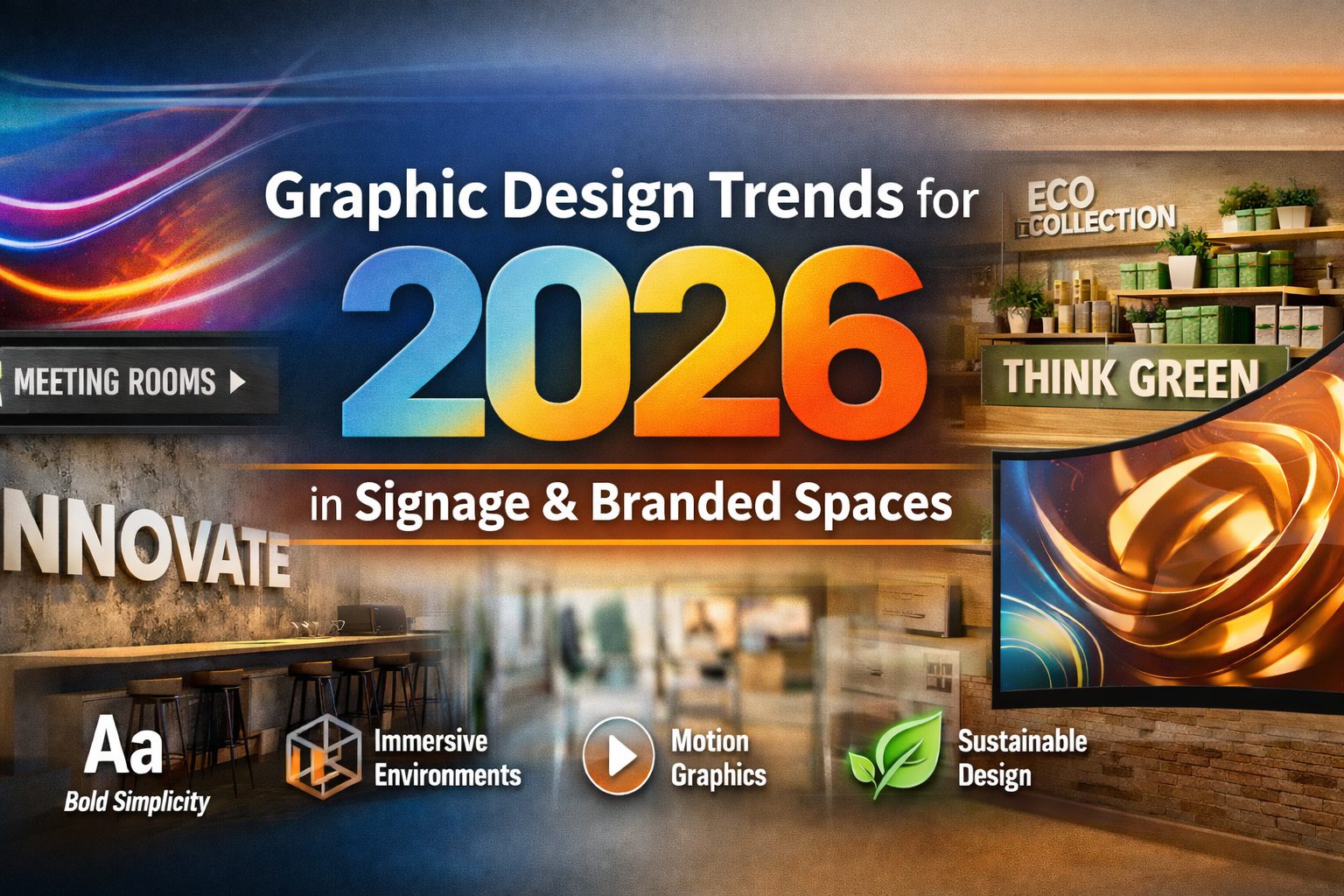
Graphic design trends do more than influence what looks current. They shape how brands are experienced in the real world.

From wall graphics and interior branding to digital signage, shopfronts, campaigns, and promotional environments, design choices affect how professional, relevant, and memorable a business appears. For marketing teams, this is about brand impact. For decision-makers, it is about ensuring branded spaces continue to reflect the business’s quality and positioning.

That is why it is worth keeping an eye on which graphic design trends are genuinely useful in signage and environmental branding — and which are best avoided.

At Hardy Signs, we work with businesses across the UK to turn brand ideas into physical environments. Based on what is proving effective across customer-facing spaces, workplaces, and branded interiors, here are some of the key graphic design trends for 2026 to know.

1. Bold Simplicity Is Replacing Overdesigned Visuals

One of the strongest graphic design trends for 2026 is a move towards clearer, bolder, more simplified visual communication.

That does not mean branding is becoming plain or forgettable. It means businesses are moving away from cluttered layouts, excessive decoration, and overly busy visuals in favour of design that is easier to absorb quickly.

In signage and graphics, this is especially important. Whether someone is walking through a retail environment, arriving at a hospitality venue, or moving around a workplace, design needs to make an immediate impact without becoming confusing.

For businesses, this trend works well because it helps:

  • improve legibility
  • strengthen brand recognition
  • make messaging easier to absorb
  • create a more modern and confident visual identity

In 2026, stronger design is often coming from restraint rather than excess.

2. Branded Environments Are Becoming More Immersive

Businesses are placing more value on spaces that feel like a clear extension of the brand, rather than simply a location with logos added afterwards.

This is driving a continued move towards immersive branded environments, where wall graphics, signage, colour palettes, digital displays, finishes, and messaging all work together to create a more complete experience.

For retail and hospitality settings, this helps create more memorable customer spaces. For workplaces, it can support culture, navigation, and a more joined-up sense of identity.

This trend is particularly relevant for businesses investing in:

  • refurbishments
  • rebrands
  • shop fitouts
  • reception redesigns
  • multi-site brand consistency
  • customer experience improvements

In 2026, graphic design is increasingly being used to shape how a space feels, not just how it looks.

3. Motion Design Continues to Grow Through Digital Signage

As digital displays become more common in customer-facing and internal environments, motion-led graphics remain an important trend for 2026.

Static design still plays a major role, but motion graphics add flexibility, energy, and immediacy to communication. They can be used to promote offers, highlight campaigns, share updates, reinforce messaging, or support a more modern customer experience.

For marketing teams, this creates more opportunities to bring campaigns into physical spaces. For operational teams, it also provides a practical way to keep communication up to date without repeatedly replacing printed materials.

In signage, motion works best when it is:

  • easy to follow
  • aligned with the brand
  • used with purpose
  • designed for the environment it appears in

The best digital graphics in 2026 are not just animated for the sake of it. They are designed to communicate more effectively.

4. Texture, Depth and Layering Are Adding More Character

Flat, overly polished graphics are giving way to design that feels more tactile, layered, and dimensional.

In 2026, many brands are moving towards visual styles that combine clean structure with greater depth. This may come through gradients, layered typography, subtle textures, shadow, material contrast, or large-scale graphics that create more visual richness without becoming chaotic.

For signage and environmental graphics, this is a useful shift. It helps spaces feel more considered and distinctive, particularly in retail, hospitality, and branded workplace settings where atmosphere matters.

This trend can be especially effective in:

  • feature walls
  • reception graphics
  • window displays
  • branded interiors
  • experiential signage
  • campaign-led graphics

Used well, texture and depth can make environments feel more premium and more memorable.

5. Typographic Design Is Becoming More Confident

Typography is doing more work in 2026.

Rather than always acting as a secondary layer behind imagery, text itself is increasingly becoming a core design feature. Large-scale type, confident statements, clean messaging, and bold directional graphics are all being used more deliberately in branded environments.

For signage, this matters because typography often has to perform several jobs at once: it needs to be legible, aligned with the brand, and visually strong enough to help define the space.

This trend is especially useful for businesses that want graphics to feel more direct, more modern, and more integrated into the environment itself.

For example, strong typographic design can work well in:

  • retail messaging
  • hospitality features
  • office interiors
  • exhibition graphics
  • wayfinding systems
  • statement brand walls

In 2026, the right words — presented in the right way — can carry as much impact as an image.

6. Sustainability Is Influencing Design Decisions

One of the most important wider shifts affecting graphic design trends for 2026 is sustainability.

Businesses are increasingly thinking not only about how graphics look, but also about how often they need to be replaced, how they are produced, and whether the design supports longer-term use across multiple applications.

For signage and graphics, this can influence decisions around:

  • material selection
  • production methods
  • reusable display systems
  • modular campaign graphics
  • digital alternatives to repeated print changes
  • timeless design over short-term novelty

For decision-makers, this is not just a design issue. It is part of a wider conversation around budget efficiency, brand longevity, and responsible procurement.

7. Trend-Chasing Is Giving Way to Brand-Led Design

Perhaps the most important point for 2026 is this: not every trend is worth following.

The strongest businesses are not redesigning around trends for the sake of it. Instead, they select ideas that support their brand, audience, and environment.

For some businesses, that might mean a cleaner and more minimalist look. For others, it might mean a more expressive and immersive branded space. The key is to use trends selectively and strategically.

Good design should still feel relevant in 12 months’ time. In signage, where investment often needs to last, that matters even more.

Which Graphic Design Trends Are Worth Investing In?

For most businesses, the most valuable trends for 2026 are the ones that improve clarity, strengthen the brand, and create a better experience in physical spaces.

That usually means focusing on:

  • bold, simple communication
  • immersive branded environments
  • purposeful motion design
  • confident typography
  • more considered material and sustainability choices

These are the trends most likely to add long-term value rather than just short-term novelty.

Talk to Hardy Signs About Graphic Design for Branded Spaces

If you are planning a rebrand, updating your workspace, refreshing your retail environment, or looking for graphics that feel more current and commercially effective, Hardy Signs can help.

We design, manufacture, and install bespoke signage and graphic solutions that bring brands to life in physical spaces — from wall graphics and branded interiors to digital displays, wayfinding, and large-scale rollout projects.

Speak to Hardy Signs today to discuss how the right graphics can strengthen your environment, support your brand, and create a more lasting impression in 2026 and beyond.

Digital signage has become one of the most flexible and effective ways for businesses to communicate with customers, visitors, staff, and contractors.

Whether it is used in a retail environment, workplace, reception area, healthcare setting, manufacturing site, or public-facing space, the value of digital signage comes from one simple advantage: it allows businesses to deliver the right message, in the right place, at the right time.

That is why more organisations are investing in digital signage solutions as part of their wider communication, customer experience, and operational strategy.

At Hardy Signs, we work with businesses across the UK to design, supply, and install digital signage solutions that support clearer communication, stronger brand presentation, and more adaptable environments.

What Are Digital Signage Solutions?

Digital signage solutions use screen-based displays to present content such as promotions, announcements, directions, menus, alerts, campaigns, brand messaging, and live information.

Unlike static signage, digital signage can be updated quickly and managed centrally. This gives businesses much more control over what is shown, where it is shown, and when it appears.

Digital signage solutions can include:

For many organisations, the real benefit is not just the screen itself but the flexibility it offers.

How Effective Is Digital Signage?

Digital signage is effective because it combines visibility, flexibility, and speed.

Traditional signage still plays an important role, but digital signage offers advantages that static formats cannot. Content can be updated without reprinting, campaigns can be scheduled in advance, messages can be adapted for different times of day, and multiple types of content can be displayed on a single screen.

That makes digital signage solutions particularly useful for organisations that need to communicate regularly, promote changing offers, manage visitor information, or improve the experience of the space.

When used well, digital signage can help businesses:

  • improve visibility of key messages
  • update content quickly and efficiently
  • support promotions and campaigns
  • enhance customer and visitor experience
  • strengthen brand presentation
  • improve internal communications
  • reduce reliance on printed updates
  • create more modern and engaging environments

Its effectiveness depends less on the screen itself and more on how clearly the system is planned, positioned, and managed.

Continue reading “Digital Signage Solutions: How Effective Are They for Modern Businesses?”

Signage isn’t something that most businesses need every day, but its impact is vast. Signage surrounds us. We caught up with Cosy Direct’s charismatic CEO, Peter Ellse, to understand the effect of signage on their business. Peter also spoke about our mutual civic engagement, which is going from strength to strength. 

Cosy Direct is a Queen’s Award winner for Enterprise 2022. The business supplies schools across the UK and the world and developer products to get children outdoors and active. They have a range of over 4000 products that are frequently updated. https://youtu.be/iPBfind3mcwManaging Director, Nik Hardy, welcomed Cosy Direct and Peter to Staffordshire back in 2021 in his capacity as the President of Burton & District Chambers of Commerce. Since then, the relationship with Cosy has strengthened, and our civic commitments have often been aligned.

As Peter explains, he had several misconceptions about signage in general – but his relationship with Nik and the Hardy Signs team eventually helped him pivot with signage. Some modern and environmentally friendly signage is now supplied at Cosy and stands proud in the indoor and outdoor environment.

CEO of Cosy Direct, Peter Ellse, says: ”I think, like many SMEs, I’m not in the market for buying signs, think they are a waste of money – all too expensive. That’s where I started in my journey to understand the power of it. Hardy Signs weren’t trying to pitch me a sign. Their team came along, and I understood the width and depth of their organisation and its marketing capabilities and was able to talk in a safe and unpushy manner. There was no expectation that I would buy a sign, but the more I talked to these extremely experienced professionals, the more I became convinced. They were local, all manufactured in Burton, and the carbon story was light to the touch. Their business was involved in putting something back to the community, which resonated with me.”

”What I’ve come to realise about signage is how much we’re ended up putting it on the back of our pictures and videos. It gives you a platform and a backdrop to reinforce your brand. I hadn’t really realised the power of signage, and it’s the first time ever in my 25 years in business that I understand just how important they are.”Both Hardy Signs and Cosy Direct are proud to support their young people with memberships with Generation Next.

The current chair of Generation Next and Marketing Manager at Hardy Signs, Daniel Nikolla, has been delighted to welcome six apprentices from Cosy Direct to the network. Finlay Riggot from Cosy eventually signed up to be an ambassador alongside Blu Hardy from Hardy Signs.

Daniel Nikolla said: ”I’m delighted to have been supported by Peter Ellse and Cosy throughout my role as the Chair of Generation Next. They have a great ethos, and I feel proud to have such supportive teams towards young professionals in the region.”Get a quote now

Gallery:

About the company: Hardy Signs is a professional and digital signage company that designs, manufactures and installs bespoke signage products to a wide range of business sectors in the United Kingdom. The company has been awarded the manufacturer of the year in 2019 and 2020.

Creating a strong customer experience is not just about service, products, or location. The physical environment plays a major role in how people feel about a business, and signage is a big part of that.

From the moment someone sees your building, enters your reception area, visits your retail space, or moves around your site, signage helps shape their experience. It influences how easily they navigate, how they interpret your brand, and how memorable that environment feels.

That is why experiential signage is becoming increasingly important for businesses that want to create more engaging, consistent, and effective spaces.

At Hardy Signs, we design, manufacture, and install signage and graphics that do more than display information. We help businesses create branded environments that leave a stronger impression on visitors, customers, and staff.

What Is Experiential Signage?

Experiential signage is signage designed to do more than identify a business or provide directions. It is used to create an environment, reinforce a brand, and improve how people experience a space.

This can include:

Used well, experiential signage helps businesses create spaces that feel more distinctive, more engaging, and more aligned with their brand.

For marketing managers, this supports customer engagement and brand consistency. For facilities managers, it helps create clearer, more usable, and better-presented environments. For decision-makers, it strengthens the overall quality and perception of the business.

Why Experiential Signage Matters

Customers and visitors often make decisions quickly. Before they speak to anyone, they are already responding to what they see around them.

A poorly presented environment can feel forgettable, inconsistent, or difficult to navigate. A well-designed environment can feel professional, welcoming, and memorable.

This is where experiential signage adds value. It helps transform signage from a basic necessity into part of the customer journey. It can:

  • improve first impressions
  • support brand recognition
  • make spaces easier to navigate
  • create a more engaging atmosphere
  • encourage repeat visits
  • strengthen the connection between brand and environment

For businesses operating in competitive sectors, that difference matters.

Signage Helps Turn Space Into Brand Experience

A business may have strong branding on paper, but physical spaces are where people experience that brand in real life.

Exterior signage, interior graphics, display features, and wayfinding all contribute to whether a space feels consistent and intentional. When signage is designed strategically, it can bring together brand colours, messaging, imagery, materials, and tone to create an environment that feels joined up.

This is especially important for businesses that want to create a memorable experience for customers, visitors, or employees.

Whether it is a retail setting, office, showroom, hospitality venue, or large commercial site, experiential signage helps turn everyday environments into brand experiences.

Why It Matters to Marketing Managers

For marketing managers, experiential signage is an important part of delivering the brand consistently across physical touchpoints.

Digital campaigns, social media, and printed materials may be well controlled, but the in-person experience can quickly become disconnected if the physical environment does not reflect the same standards.

Experiential signage helps marketing teams:

  • create more memorable branded environments
  • improve visual consistency across locations
  • support campaigns, launches, and promotions
  • make customer-facing spaces more engaging
  • reinforce the identity and personality of the brand

It is not just about visibility. It is about making the brand feel real in the space.

Why It Matters to Facilities Managers

For facilities managers, signage must also perform practically.

It needs to be durable, clear, suitable for the environment, and easy to maintain. Experiential signage should never come at the expense of usability. The best solutions combine strong visual design with practical function.

That means helping people move through a site easily, understand where they are, and interact with the space more confidently. In workplaces and public-facing settings, this can improve visitor flow, reduce confusion, and create a more professional atmosphere.

For facilities teams, experiential signage can support both presentation and function at the same time.

Types of Experiential Signage That Add Value

There are many ways signage and graphics can improve the experience of a space.

Wall and Wallpaper Graphics

Large-scale wall graphics can completely change the feel of an interior environment. They can reinforce branding, add energy to a space, support storytelling, or make a workplace or reception area more visually engaging.

Digital Signage

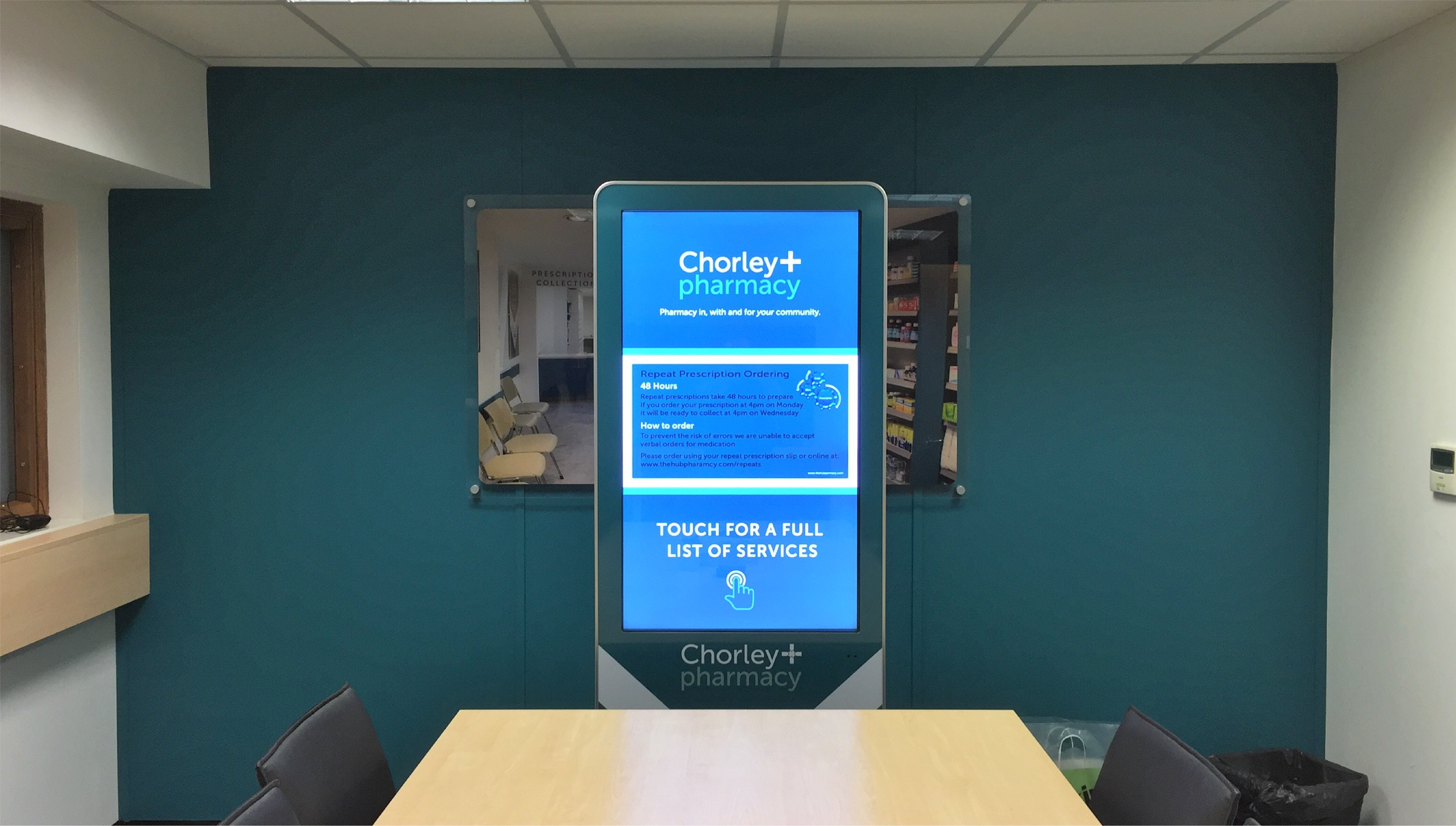
Digital signage allows businesses to present dynamic content that can be updated quickly and tailored to different audiences. It can be used for promotions, information, internal communications, visitor messaging, and interactive experiences.

Illuminated Signage

Illuminated signage adds visibility and impact, both externally and internally. It can help create focal points, improve brand presence, and make key messages stand out day and night.

Wayfinding Signage

Wayfinding is often seen as purely functional, but it also contributes to the wider experience of a space. Branded wayfinding helps visitors navigate confidently while maintaining visual consistency in the environment.

Vehicle Graphics

Vehicle graphics extend the brand beyond a fixed location. They can help raise visibility, strengthen recognition, and support a more consistent brand presence wherever the vehicle is seen.

Experiential Signage Is Especially Valuable in Customer-Facing Environments

Businesses that rely on footfall, visits, or in-person interaction can benefit significantly from a more considered signage experience.

This includes:

  • retail environments
  • showrooms
  • leisure and hospitality spaces
  • offices and receptions
  • healthcare and education settings
  • visitor attractions
  • multi-site businesses

In these settings, signage is not just functional. It helps shape how the environment is perceived and remembered.

Good Signage Design Balances Experience and Practicality

The most effective signage does not focus on appearance alone. It balances creativity with clarity, brand alignment with usability, and visual impact with long-term performance.

That is what makes experiential signage commercially valuable. It helps businesses create spaces that look better, work better, and leave a stronger impression.

At Hardy Signs, we work with businesses across the UK to create signage and graphics that support both customer experience and operational needs. From wallpaper graphics and digital displays to illuminated signs, vehicle graphics, and wayfinding, we help clients create environments that are easier to navigate, more engaging to spend time in, and more reflective of their brand.

Talk to Hardy Signs About Experiential Signage

If you are looking to improve your customer environment, strengthen your brand in physical spaces, or create a more engaging experience across your sites, Hardy Signs can help.

We design, manufacture, and install bespoke signage solutions that combine creativity, consistency, and practical delivery.

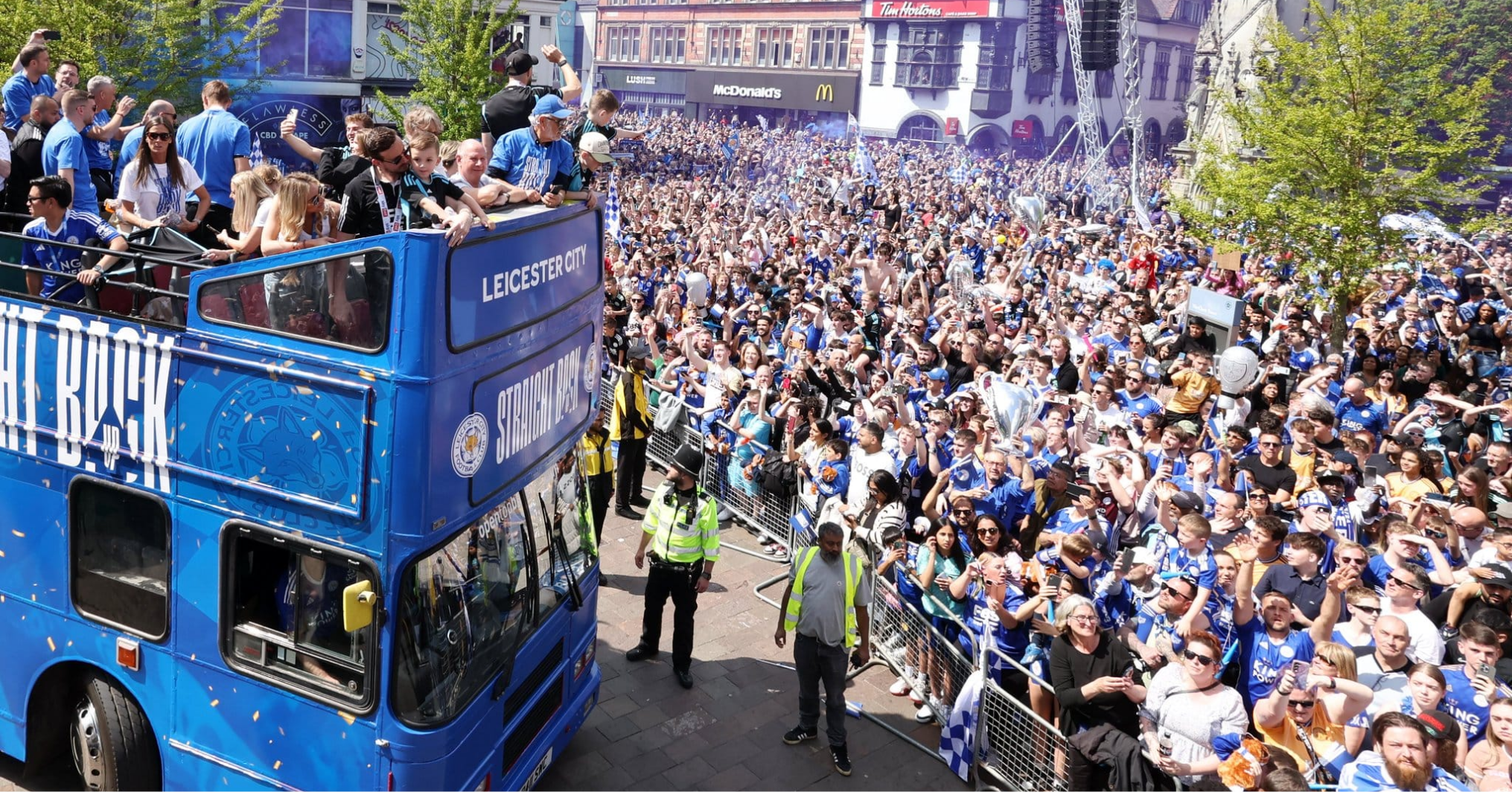
A jubilant crowd surrounds a blue open-top bus with

GET IN TOUCH

Ready to get started?

Contact our friendly team to begin your signage project today.

Say Hello