Workplace Signage for Efficiency and Better Workflow

Share this Story
Friday 2 January 2026
In busy workplaces, efficiency depends on more than people and processes alone. The physical environment also plays a major role in how smoothly a site operates.
When equipment is hard to find, work areas are unclear, instructions are inconsistent, or visitors interrupt staff for directions, time is lost and mistakes become more likely. Over time, these small friction points can affect productivity, safety, and the overall experience of the workplace.
That is why workplace signage for efficiency is so important.
Well-planned signs and graphics help people move through a space more easily, understand where things belong, and access key information quickly. In warehouses, manufacturing facilities, offices, and operational sites, signage can support a more organised, consistent, and efficient workflow.
At Hardy Signs, we help businesses create signage and graphics that do more than identify spaces. We design solutions that help workplaces function better.
Why Workplace Signage Matters for Efficiency
When a site is clearly organised, people make faster decisions and spend less time searching, asking, or second-guessing.
Signage can help reduce unnecessary movement, improve communication, reinforce procedures, and make work areas easier to understand at a glance. This is especially important in larger workplaces where several teams, processes, and visitors may all be using the same environment.
For operations teams, facilities managers, and decision-makers, effective signage can support:
- clearer workflow across departments
- better use of space
- faster movement around the site
- fewer avoidable mistakes
- improved safety awareness
- more consistent site standards
- a better experience for staff, visitors, and contractors
In other words, signage helps make the environment work harder.
1. Clearly Label Equipment and Resource Areas
One of the simplest ways to improve workflow is to make equipment, tools, and key resources easier to locate.
Whether the site includes printers, scanners, stock areas, production machinery, first aid points, collection zones, or shared equipment stations, staff need to know where to find what they need without delay.
Clear signage helps remove uncertainty and reduces wasted time, particularly in busy or fast-moving environments. It can also help new starters, temporary staff, and contractors settle into the site more quickly.
In larger spaces, overhead signs, wall-mounted signs, and area markers can all help make equipment locations more visible and easier to identify from a distance.
2. Define Work Areas More Clearly
Many workplaces depend on clearly separated zones to keep operations running smoothly.
In a warehouse or manufacturing environment, this may include goods-in, dispatch, picking, assembly, quality control, storage, packing, and management. In offices or mixed-use environments, it could include departments, meeting spaces, reception, staff-only areas, and shared service points.
When these areas are not clearly labelled, people lose time, make mistakes, or interrupt others to ask where they need to go.
Good signage helps define each area clearly and consistently. This supports a more organised environment and makes it easier for staff to navigate the site as part of their day-to-day role.
For operational sites, this can have a direct impact on speed, clarity, and overall efficiency.
3. Keep Messaging Simple and Easy to Read
One of the biggest mistakes in workplace signage is trying to say too much.
The most effective signage is clear, direct, and easy to understand quickly. In a busy working environment, people do not have time to stop and read long explanations. Signs should communicate the message immediately.
This means using:
- short wording
- clear headings
- strong contrast
- readable typography
- simple visual hierarchy
Where possible, signs should identify a place, action, or instruction without unnecessary wording. The clearer the message, the easier it is for people to act on it correctly.
For businesses looking to improve workflow, clarity is often more valuable than complexity.
4. Use Graphics and Visual Aids to Support Instructions
Not every important message should rely on text alone.
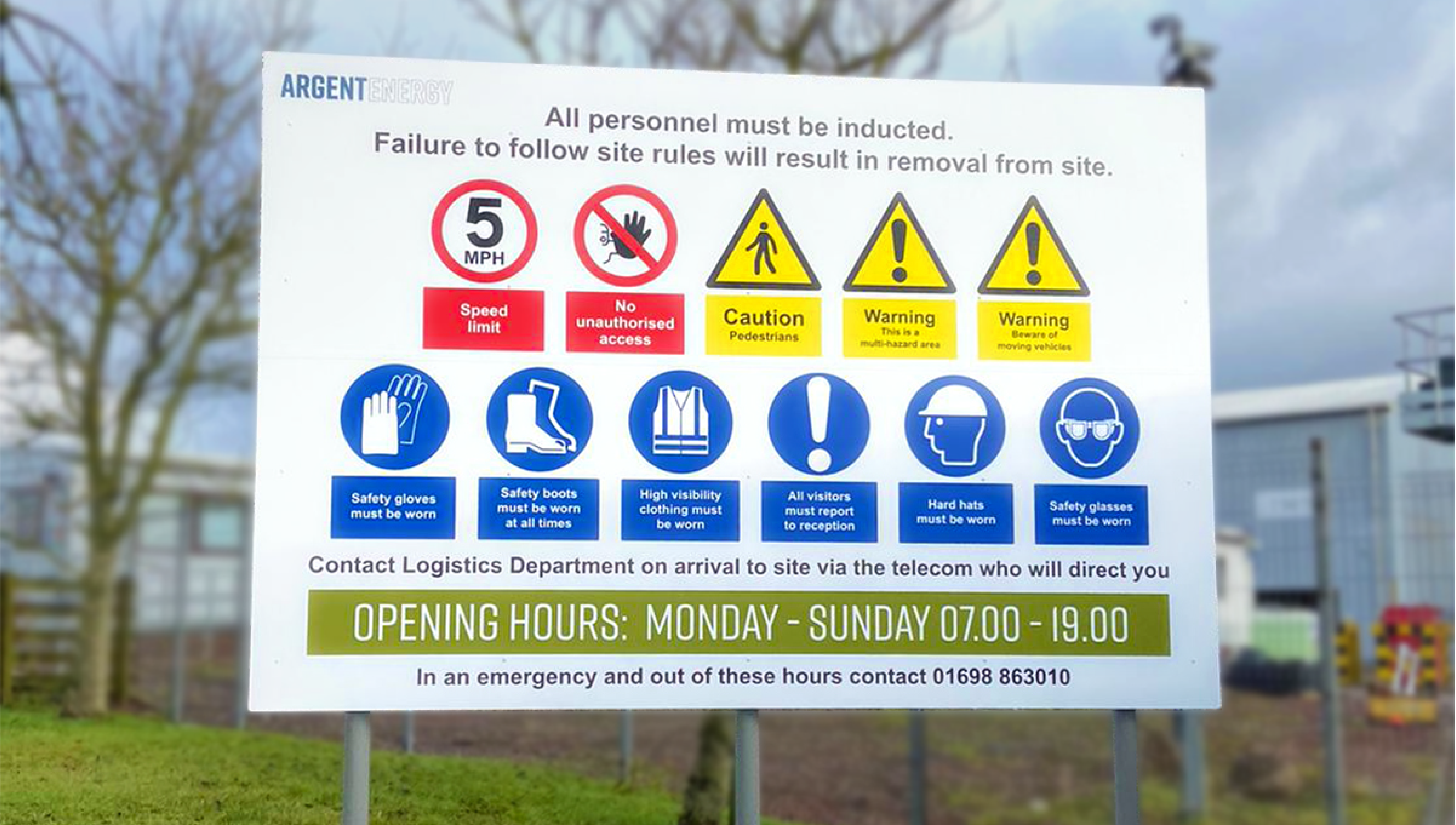
Graphics, symbols, and visual aids can help employees absorb information more quickly, especially when reinforcing procedures, safety expectations, or workflow steps. This is particularly useful in environments where staff need to make fast decisions or where information needs to be understood at a glance.
Visual communication can be used for:
- process reminders
- safety instructions
- equipment guidance
- workflow steps
- operational notices
- zone identification
Used properly, graphics can improve consistency and reduce the risk of messages being overlooked or misunderstood.
For facilities and operations teams, this can help create a site that is easier to manage and easier for people to work within.
5. Improve Movement With Better Wayfinding
An efficient workflow is not only about staff. It also includes how visitors, contractors, and delivery drivers move around the site.
If people cannot easily find reception, meeting rooms, collection points, welfare areas, or key departments, staff often end up stepping in to help. In larger facilities, this can create repeated interruptions and unnecessary friction throughout the day.
Wayfinding signage reduces that problem by helping people navigate independently and more confidently.
Good wayfinding can support:
- visitor journeys
- contractor access
- departmental navigation
- reception and check-in flow
- movement through larger or more complex buildings
For workplaces that regularly receive external visitors or operate across larger footprints, better wayfinding can improve both efficiency and overall site experience.
6. Support Safety and Workflow at the Same Time
In many operational environments, safety and efficiency go hand in hand.
Clear signage reinforces safe movement, identifies hazards, separates pedestrian and vehicle routes, and highlights critical instructions without disrupting the pace of work. When done well, this helps create a site that is both more productive and easier to manage responsibly.
In manufacturing sites, warehouses, and industrial workplaces, signage often needs to serve multiple roles: supporting compliance, reducing confusion, and helping operations run smoothly.
That is why signage should be treated as part of the wider workflow system, not just as an afterthought.
7. Create Consistency Across the Entire Site
One-off signs added over time can lead to clutter, inconsistency, and confusion.
A more strategic signage approach helps businesses create consistent standards across departments, processes, and locations. This makes the environment easier to understand and gives the workplace a more organised, professional feel.
For decision-makers, consistent signage also makes it easier to scale site standards across multiple areas or multiple locations. That can be particularly valuable for businesses looking to improve operational control and maintain higher standards across their estate.
Better Signage Helps Workplaces Function Better
Workplace signage is often seen as purely practical, but its impact can be much broader.
Done properly, signage helps people work more efficiently, navigate more confidently, and interact with the environment more effectively. It supports workflow, reduces avoidable delays, and helps create a site that feels better organised from the ground up.
At Hardy Signs, we work with businesses across the UK to design, manufacture, and install signage solutions that improve clarity, efficiency, and consistency in real working environments.
Talk to Hardy Signs
If you are looking to improve workflow across your workplace, warehouse, office, or manufacturing site, Hardy Signs can help.
We create bespoke signage and graphics that support safer, more organised, and more efficient environments for staff, visitors, and operational teams.