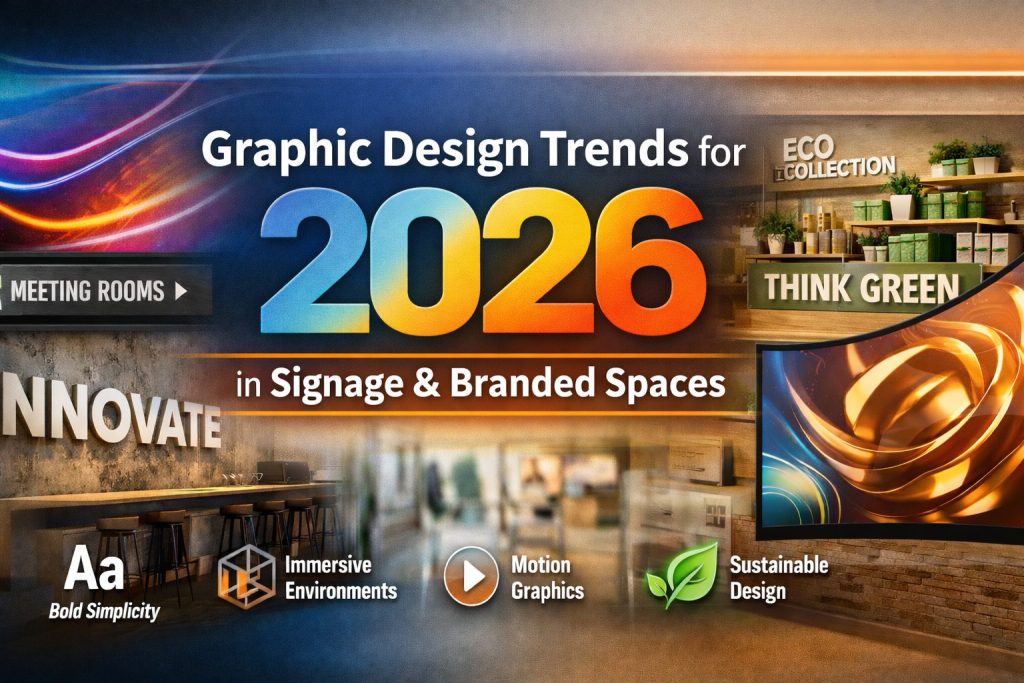
Graphic Design Trends for 2026

Share this Story
Friday 2 January 2026
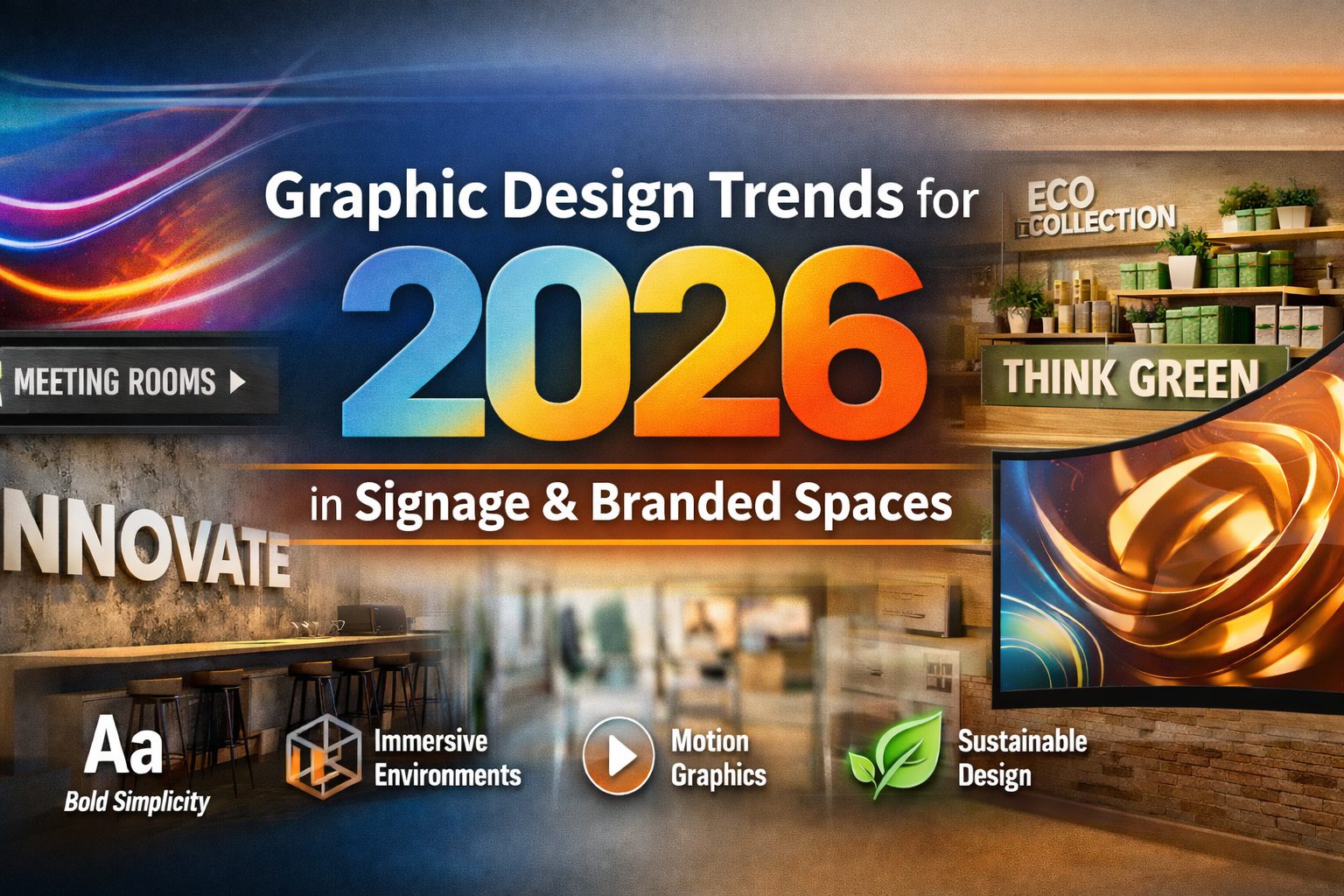
Graphic design trends do more than influence what looks current. They shape how brands are experienced in the real world.
From wall graphics and interior branding to digital signage, shopfronts, campaigns, and promotional environments, design choices affect how professional, relevant, and memorable a business appears. For marketing teams, this is about brand impact. For decision-makers, it is about ensuring branded spaces continue to reflect the business’s quality and positioning.
That is why it is worth keeping an eye on which graphic design trends are genuinely useful in signage and environmental branding — and which are best avoided.
At Hardy Signs, we work with businesses across the UK to turn brand ideas into physical environments. Based on what is proving effective across customer-facing spaces, workplaces, and branded interiors, here are some of the key graphic design trends for 2026 to know.
1. Bold Simplicity Is Replacing Overdesigned Visuals
One of the strongest graphic design trends for 2026 is a move towards clearer, bolder, more simplified visual communication.
That does not mean branding is becoming plain or forgettable. It means businesses are moving away from cluttered layouts, excessive decoration, and overly busy visuals in favour of design that is easier to absorb quickly.
In signage and graphics, this is especially important. Whether someone is walking through a retail environment, arriving at a hospitality venue, or moving around a workplace, design needs to make an immediate impact without becoming confusing.
For businesses, this trend works well because it helps:
- improve legibility
- strengthen brand recognition
- make messaging easier to absorb
- create a more modern and confident visual identity
In 2026, stronger design is often coming from restraint rather than excess.
2. Branded Environments Are Becoming More Immersive
Businesses are placing more value on spaces that feel like a clear extension of the brand, rather than simply a location with logos added afterwards.
This is driving a continued move towards immersive branded environments, where wall graphics, signage, colour palettes, digital displays, finishes, and messaging all work together to create a more complete experience.
For retail and hospitality settings, this helps create more memorable customer spaces. For workplaces, it can support culture, navigation, and a more joined-up sense of identity.
This trend is particularly relevant for businesses investing in:
- refurbishments
- rebrands
- shop fitouts
- reception redesigns
- multi-site brand consistency
- customer experience improvements
In 2026, graphic design is increasingly being used to shape how a space feels, not just how it looks.
3. Motion Design Continues to Grow Through Digital Signage
As digital displays become more common in customer-facing and internal environments, motion-led graphics remain an important trend for 2026.
Static design still plays a major role, but motion graphics add flexibility, energy, and immediacy to communication. They can be used to promote offers, highlight campaigns, share updates, reinforce messaging, or support a more modern customer experience.
For marketing teams, this creates more opportunities to bring campaigns into physical spaces. For operational teams, it also provides a practical way to keep communication up to date without repeatedly replacing printed materials.
In signage, motion works best when it is:
- easy to follow
- aligned with the brand
- used with purpose
- designed for the environment it appears in
The best digital graphics in 2026 are not just animated for the sake of it. They are designed to communicate more effectively.
4. Texture, Depth and Layering Are Adding More Character
Flat, overly polished graphics are giving way to design that feels more tactile, layered, and dimensional.
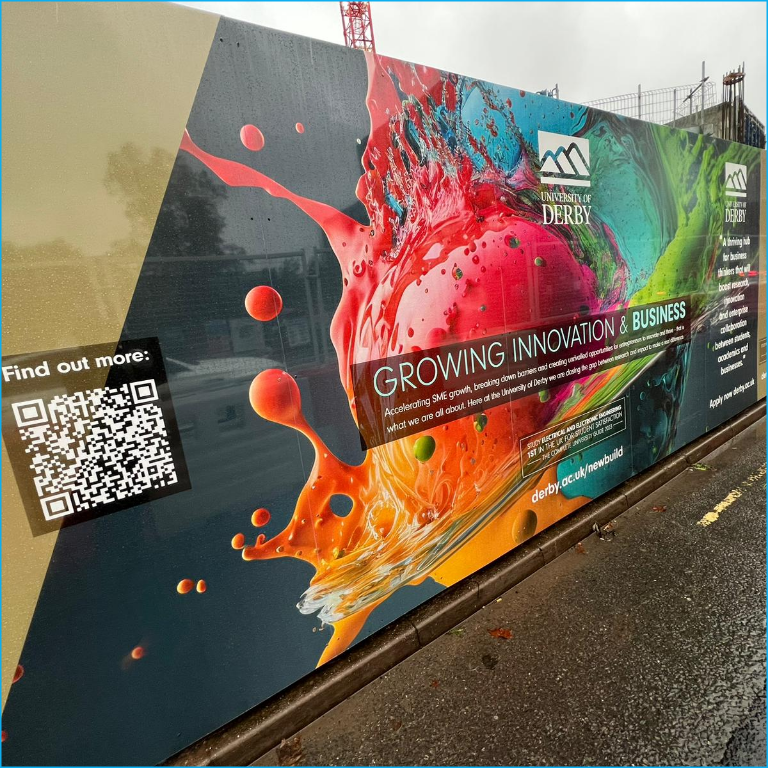
In 2026, many brands are moving towards visual styles that combine clean structure with greater depth. This may come through gradients, layered typography, subtle textures, shadow, material contrast, or large-scale graphics that create more visual richness without becoming chaotic.
For signage and environmental graphics, this is a useful shift. It helps spaces feel more considered and distinctive, particularly in retail, hospitality, and branded workplace settings where atmosphere matters.
This trend can be especially effective in:
- feature walls
- reception graphics
- window displays
- branded interiors
- experiential signage
- campaign-led graphics
Used well, texture and depth can make environments feel more premium and more memorable.
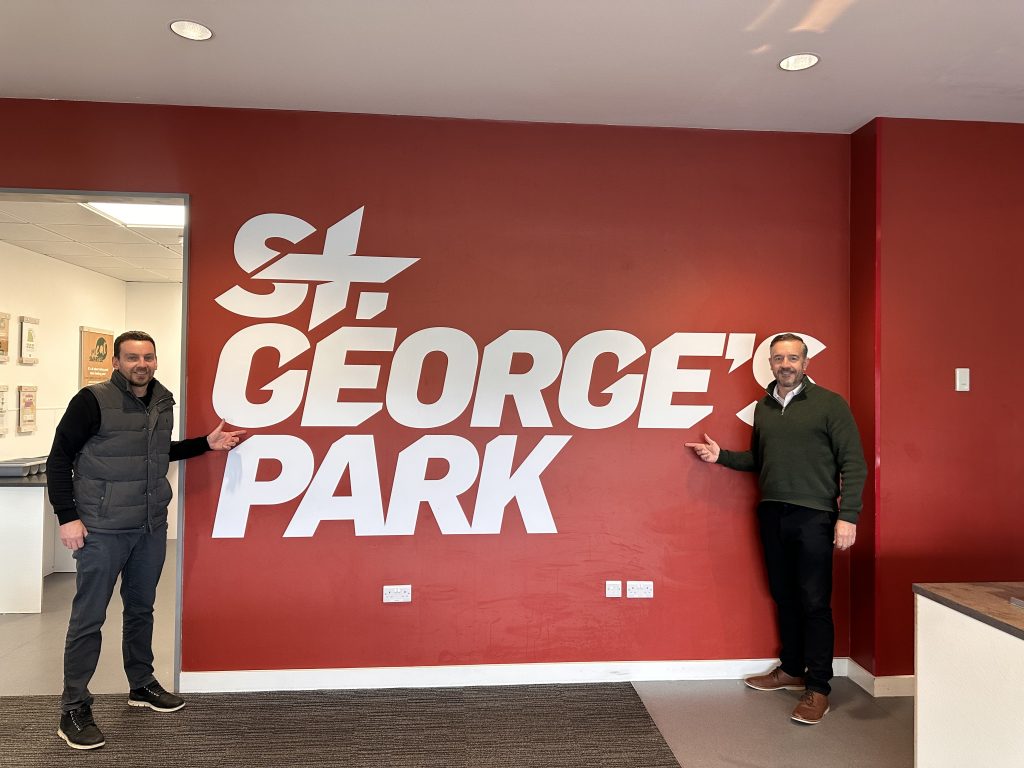
5. Typographic Design Is Becoming More Confident
Typography is doing more work in 2026.
Rather than always acting as a secondary layer behind imagery, text itself is increasingly becoming a core design feature. Large-scale type, confident statements, clean messaging, and bold directional graphics are all being used more deliberately in branded environments.
For signage, this matters because typography often has to perform several jobs at once: it needs to be legible, aligned with the brand, and visually strong enough to help define the space.
This trend is especially useful for businesses that want graphics to feel more direct, more modern, and more integrated into the environment itself.
For example, strong typographic design can work well in:
- retail messaging
- hospitality features
- office interiors
- exhibition graphics
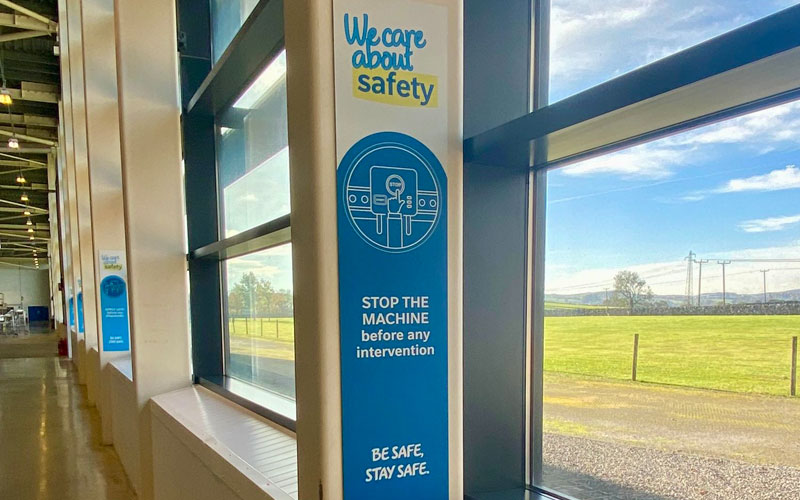
- wayfinding systems
- statement brand walls
In 2026, the right words — presented in the right way — can carry as much impact as an image.
6. Sustainability Is Influencing Design Decisions
One of the most important wider shifts affecting graphic design trends for 2026 is sustainability.
Businesses are increasingly thinking not only about how graphics look, but also about how often they need to be replaced, how they are produced, and whether the design supports longer-term use across multiple applications.
For signage and graphics, this can influence decisions around:
- material selection
- production methods
- reusable display systems
- modular campaign graphics
- digital alternatives to repeated print changes
- timeless design over short-term novelty
For decision-makers, this is not just a design issue. It is part of a wider conversation around budget efficiency, brand longevity, and responsible procurement.
7. Trend-Chasing Is Giving Way to Brand-Led Design
Perhaps the most important point for 2026 is this: not every trend is worth following.
The strongest businesses are not redesigning around trends for the sake of it. Instead, they select ideas that support their brand, audience, and environment.
For some businesses, that might mean a cleaner and more minimalist look. For others, it might mean a more expressive and immersive branded space. The key is to use trends selectively and strategically.
Good design should still feel relevant in 12 months’ time. In signage, where investment often needs to last, that matters even more.
Which Graphic Design Trends Are Worth Investing In?
For most businesses, the most valuable trends for 2026 are the ones that improve clarity, strengthen the brand, and create a better experience in physical spaces.
That usually means focusing on:
- bold, simple communication
- immersive branded environments
- purposeful motion design
- confident typography
- more considered material and sustainability choices
These are the trends most likely to add long-term value rather than just short-term novelty.
Talk to Hardy Signs About Graphic Design for Branded Spaces
If you are planning a rebrand, updating your workspace, refreshing your retail environment, or looking for graphics that feel more current and commercially effective, Hardy Signs can help.
We design, manufacture, and install bespoke signage and graphic solutions that bring brands to life in physical spaces — from wall graphics and branded interiors to digital displays, wayfinding, and large-scale rollout projects.
Speak to Hardy Signs today to discuss how the right graphics can strengthen your environment, support your brand, and create a more lasting impression in 2026 and beyond.